




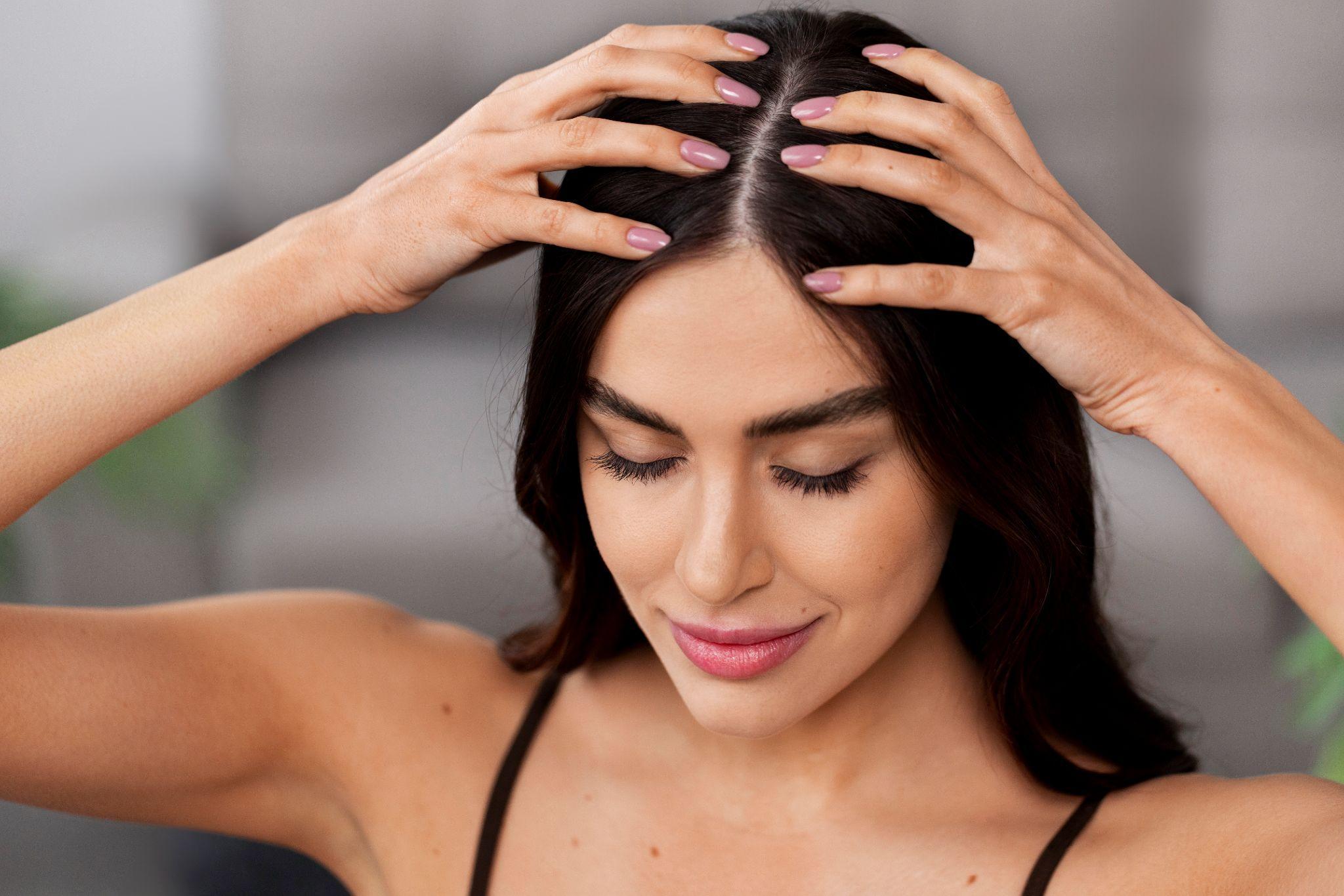
Most people, when they notice hair thinning or excessive shedding, immediately start looking at their strands. They switch shampoos, try new serums, or load up on hair masks. But the strand itself is already dead tissue. Whatever is happening to it — the thinning, the breakage, the dullness — started much earlier, at the root. And the root lives in your scalp.
If your scalp isn’t healthy, your hair simply cannot be.
The Scalp Is Living Skin — Treat It Like That
Your scalp is not just the skin under your hair. It’s a highly active biological environment. It contains hair follicles, sebaceous glands, blood vessels, and a microbiome of its own. Every strand of hair you grow emerges from a follicle embedded in this skin, and that follicle depends entirely on what’s happening around it.
When the scalp is balanced — proper oil production, good blood flow, clean follicle openings — hair grows in healthy cycles. When something disrupts that balance, the follicle is the first to suffer. And once a follicle is consistently deprived of what it needs, it doesn’t just grow thinner hair. Over time, it may stop producing hair altogether.
What Disrupts Scalp Health More Than You Think
People tend to blame one or two obvious culprits — stress, diet, genetics. And while those do matter, scalp health is affected by a wider range of everyday factors that rarely get discussed:
- Product buildup from dry shampoos, heavy conditioners, or silicone-laden stylers can clog follicle openings and reduce healthy hair cycling
- Hard water, common in Indian cities, leaves mineral deposits on the scalp that gradually alter its pH and disrupt the skin barrier
- Over-washing strips the scalp of natural oils, triggering overproduction of sebum to compensate — which then clogs pores
- Under-washing, on the other hand, allows dead skin, oil, and environmental pollution to accumulate around follicles
- Tight hairstyles and constant friction from accessories create localized inflammation, especially along the hairline
Each of these may seem minor individually. Together, they add up to a scalp that’s chronically stressed — even if it’s not visibly irritated.
The Inflammation Connection
One of the most underappreciated reasons for hair loss is scalp inflammation. It’s not always visible. There may be no redness, no flaking, no itching. But subclinical inflammation — the kind that exists below the skin’s surface — is enough to interfere with the hair growth cycle.
Inflammation around a follicle restricts the delivery of oxygen and nutrients through tiny capillaries. It also shortens the anagen (growth) phase of the hair cycle, meaning hair spends less time growing and more time resting or shedding. This is a key reason why people experiencing chronic scalp inflammation often notice diffuse thinning rather than defined bald patches.
Conditions like dandruff, scalp psoriasis, and seborrheic dermatitis are all, at their core, inflammatory conditions. Even dandruff — which many people dismiss as a cosmetic issue — is worth understanding more deeply. According to dandruff research, the condition is often linked to a yeast called Malassezia that triggers an immune response in the scalp, causing rapid skin cell turnover and irritation. Left unaddressed, this cycle of inflammation can weaken follicles over time.
How to Actually Support Your Scalp
Caring for your scalp is not the same as caring for your hair. It requires a different kind of attention:
- Scalp massage improves microcirculation and helps deliver nutrients to follicles — even five minutes a few times a week makes a measurable difference
- Choose scalp-specific products that address your scalp type, not just your hair type
- Clarify your scalp periodically to remove buildup, especially if you use styling products regularly
- If you notice persistent flaking, itching, or tenderness, treat it as a medical concern, not a cosmetic one
Where Traya Fits In
Understanding that hair health starts at the scalp level is what separates short-term fixes from actual recovery. Traya is built around this principle — their approach looks at scalp condition as one part of a larger picture that includes hormones, nutrition, and lifestyle. It’s a more grounded way of thinking about why hair loss happens in the first place.
Final Thoughts
Your scalp is not background noise in your hair health journey — it is the main stage. Before chasing better shampoos or miracle serums, it’s worth asking what’s actually happening at the root level. A healthy scalp doesn’t guarantee perfect hair, but an unhealthy one almost always leads to compromised growth. Start there, and everything else becomes clearer.