




Sayan Biswas is an engineer, entrepreneur, and policy professional whose work spans renewable energy innovation, science policy, and advanced engineering research. Sayan Biswas is the founder and CEO of TerraCare Energy, where he leads the development of scalable energy technologies, including a patented prototype designed to generate 10 to 100 kWh per day. His experience includes serving as a science and technology policy fellow at the U.S. Department of Energy, where he supported commercialization strategies for emerging technologies across AI, quantum systems, and critical materials. With a doctorate in aerospace engineering and a background managing multimillion-dollar research programs funded by agencies such as NASA and the Department of Defense, his work connects technical innovation with real-world deployment. His expertise aligns closely with emerging solutions such as high-altitude wind energy systems.
The Future of High-Altitude Wind Energy
Wind energy is already a cornerstone of the global transition to cleaner power, but most turbines today capture wind close to the ground, typically within a few hundred feet. At higher altitudes, winds tend to be stronger and more consistent. This has led researchers and engineers to explore high-altitude wind energy systems, an emerging class of technologies designed to harness energy from the sky using tethered devices rather than traditional towers.
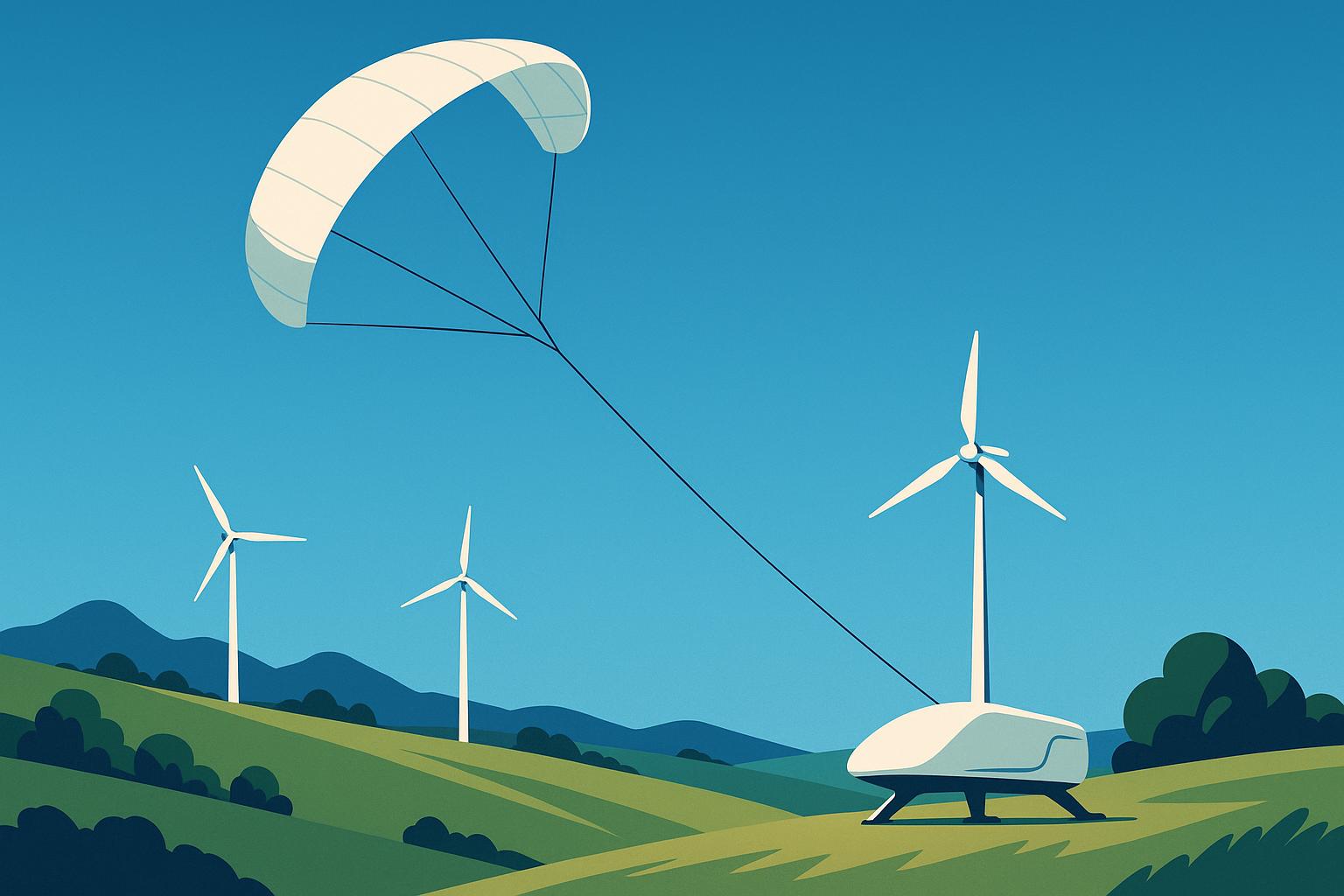
High-altitude wind energy, often called airborne wind energy, relies on systems such as kites, drones, or gliders that are connected to the ground by cables. These devices fly at elevations ranging from hundreds of feet to several thousand feet, where wind speeds are significantly higher than at ground level. Because the power available from wind increases with the cube of wind speed, even modest increases in velocity can translate into substantially greater energy generation potential.
One of the key advantages of these systems is their reduced material footprint. Conventional wind turbines require large steel towers and heavy foundations, which can be costly and resource-intensive to build and transport. Airborne systems, by contrast, use lightweight components and can be deployed in areas where traditional turbines may be impractical, such as remote regions, deep offshore environments, or locations with challenging terrain. This flexibility could make wind energy more accessible in parts of the world that currently lack reliable infrastructure.
Another promising feature is the ability to access more consistent wind patterns. Near the surface, wind can be intermittent and influenced by local geography. At higher altitudes, wind flows tend to be steadier, which can improve the reliability of power generation. Studies have suggested that high-altitude systems could achieve higher capacity factors than conventional wind turbines, meaning they produce energy more consistently over time.
Despite these advantages, the technology is still in development and faces several challenges. One major hurdle is ensuring the safe and reliable operation of airborne devices over long periods. Systems must be able to launch, maintain stable flight, and land autonomously under a wide range of weather conditions. The durability of tethers and components is another concern, as they must withstand continuous mechanical stress and environmental exposure.
Regulation and airspace management also present important considerations. Airborne wind systems operate in airspace that may overlap with aviation routes, requiring coordination with regulatory agencies to ensure safety. Clear frameworks for permitting and operation are still evolving, which can slow deployment.
Cost is another factor that will determine the future of high-altitude wind energy. While the potential for lower material use is appealing, early-stage technologies often face high development and scaling costs. As with many renewable innovations, achieving cost competitiveness will depend on continued research, pilot projects, and eventual mass production.
There is growing interest in integrating airborne wind energy into broader energy systems. These technologies could complement existing renewables by providing power in locations where solar or conventional wind are less effective. They may also play a role in powering off-grid applications, such as remote communities, disaster response operations, or mobile infrastructure.
The future of high-altitude wind energy is not yet fully defined, but its potential is significant. By accessing stronger and more consistent winds with less material, these systems offer a new way to think about how and where energy can be generated. As research advances and real-world deployments expand, airborne wind energy could become an important part of a more flexible and resilient renewable energy landscape.
About Sayan Biswas
Sayan Biswas is the founder and CEO of TerraCare Energy and an experienced engineer with a background in aerospace and mechanical engineering. He has led federally funded research programs exceeding 6 million dollars and worked with organizations such as NASA, the U.S. Department of Defense, and the Department of Energy. He also served as a science and technology policy fellow supporting commercialization of advanced technologies. In addition, he currently works as a hospitalist in Hawaii while maintaining active engagement in engineering, mentorship, and professional organizations.