




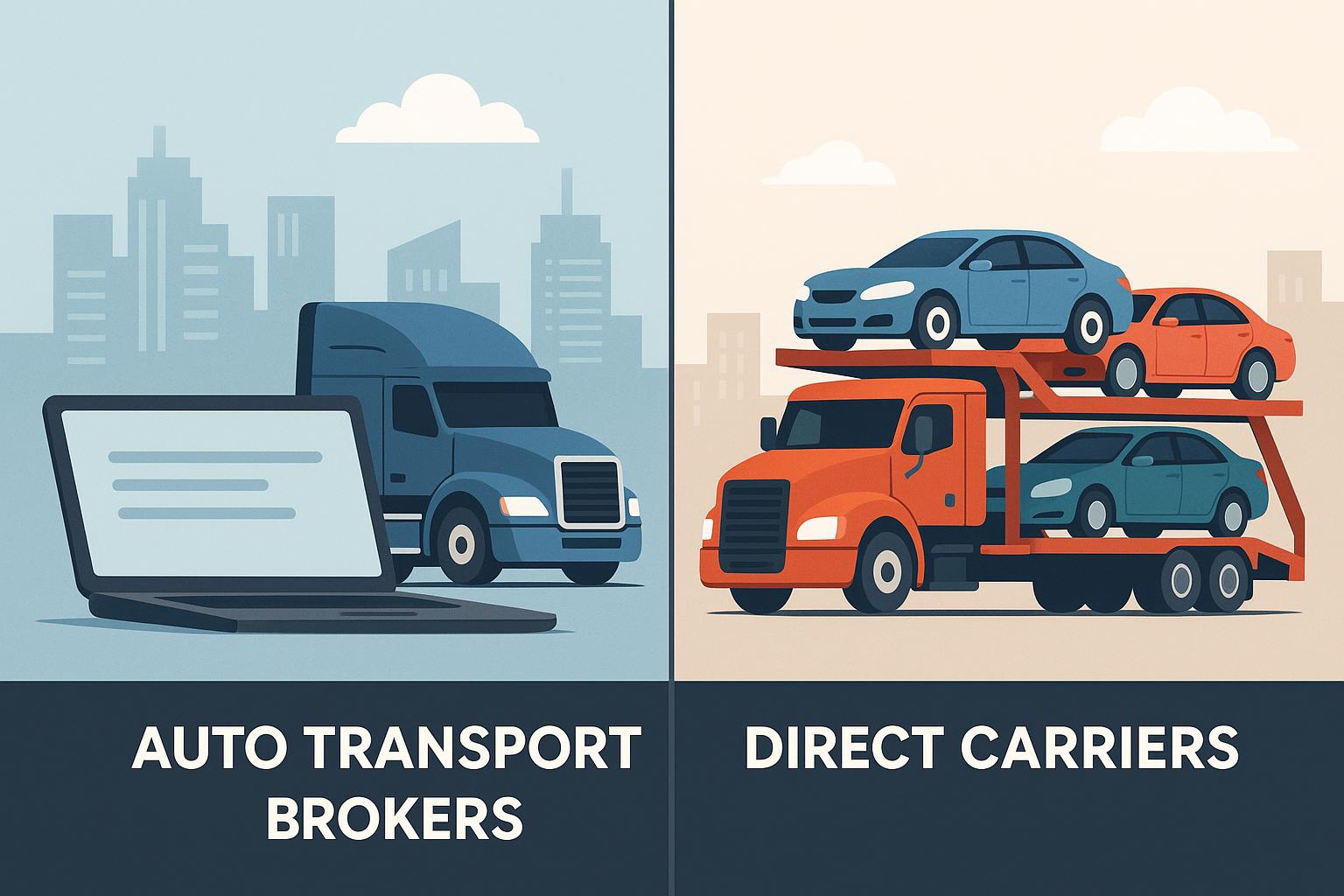
If you’re shipping a vehicle in 2026, one of the first decisions you’ll face is whether to work with a broker or go directly to a carrier.
At a glance, it sounds simple: cut out the middleman and save money. But in reality, that logic often breaks down. The auto transport industry doesn’t function like a typical retail purchase — it operates as a live logistics marketplace where pricing, availability, and timing constantly shift.
Choosing the wrong model can lead to delays, unexpected price changes, or difficulty securing a driver altogether.
This guide breaks down how brokers and direct carriers actually work in 2026, what’s changed in the market, and which option makes the most sense depending on your situation.
What Is a Direct Carrier?
A direct carrier is a company that owns trucks and physically transports vehicles.
They:
- Operate their own fleet
- Employ drivers
- Handle pickup and delivery
- Work within specific routes or regions
Pros of Direct Carriers
- Direct communication with the driver
- Fewer layers between you and the shipment
- Potentially smoother experience if your route aligns
Cons of Direct Carriers
- Limited geographic coverage
- Fewer available pickup windows
- Less flexibility during peak demand
- Longer wait times if your route isn’t common
In 2026, most carriers still operate fixed or semi-fixed routes. If your shipment doesn’t fit their schedule, you may need to wait — sometimes days or even weeks.
What Is an Auto Transport Broker?
A broker does not own trucks. Instead, they coordinate shipments by connecting customers with carriers.
They:
- Access a nationwide carrier network
- Handle pricing and negotiations
- Coordinate logistics and timing
- Manage communication
Brokers function as logistics coordinators, not transport providers.
Pros of Brokers
- Nationwide carrier access
- Faster booking options
- More flexible scheduling
- Competitive pricing based on demand
Cons of Brokers
- Quality varies depending on the company
- Communication depends on internal processes
- Some brokers still use outdated pricing tactics
In 2026, the best brokers operate more like dispatch platforms than middlemen.
What Changed in 2026
The broker vs carrier dynamic has shifted significantly.
1. Carrier Capacity Is More Competitive
Demand has increased across:
- Relocations
- Snowbird routes
- Online vehicle purchases
Carriers are booked faster, and availability is tighter.
Brokers with strong networks now have a major advantage.
2. Pricing Became Market-Driven
Pricing is no longer static.
It depends on:
- Route demand
- Fuel costs
- Seasonal spikes
- Carrier availability
This means quotes are only as good as their alignment with the real market.
3. Speed of Execution Became Critical
In 2026, the biggest difference is not price — it’s how quickly your vehicle gets assigned to a driver.
Brokers often win here because they can match shipments across multiple carriers instantly.
How Pricing Actually Works (Broker vs Carrier)
This is where most confusion happens.
Carrier Pricing
Carriers price based on:
- Their route
- Available trailer space
- Fuel and time
If your shipment fits perfectly, pricing may be competitive.
If not, you’ll either:
- Pay more
- Wait longer
- Not get service at all
Broker Pricing
Brokers price based on:
- Real-time market demand
- Carrier availability
- Route popularity
This creates more dynamic pricing — but also more realistic execution.
A low broker quote that doesn’t match the market won’t get picked up.
A realistic one will.
Real Scenario: New York to Florida
Let’s look at a common route.
Direct Carrier
- May only run the route on specific days
- Limited availability
- Price: $900–$1,200 (if aligned)
- Risk: waiting several days for pickup
Broker
- Access to multiple carriers on the route
- Faster assignment
- Price: $1,000–$1,300
- Lower risk of delays
In this scenario, the broker often provides faster and more predictable service — even if the price is slightly higher.
Risk Comparison: Where Things Go Wrong
With Direct Carriers
- No availability for your dates
- Route mismatch
- Delayed pickup
- Limited backup options
With Brokers
- Lowball pricing (with weak brokers)
- Poor carrier selection (if not vetted)
- Communication issues (company-dependent)
The key takeaway: both models have risks — but broker risk depends heavily on the company you choose.
How to Vet a Broker vs Carrier
Before booking, always check:
FMCSA Registration
Verify USDOT and MC numbers.
Insurance Coverage
Understand cargo insurance limits and claims process.
Pricing Transparency
Is the quote realistic or suspiciously low?
Communication
Do they explain the process clearly?
Carrier Network (for brokers)
Do they have strong access or limited options?
These factors matter more than whether the company is a broker or carrier.
When to Choose a Direct Carrier
A carrier may be the better choice if:
- Your route matches their regular lane
- You have flexible timing
- You want direct driver communication
- It’s a short or regional move
In these cases, the simplicity can work in your favor.
When to Choose a Broker
A broker is usually the better option if:
- You’re shipping long-distance
- You need faster pickup
- Your route is less common
- You’re moving during peak season
- Timing matters
For most cross-country shipments in 2026, brokers provide more reliability.
Where Navi Auto Transport Fits In
Navi Auto Transport operates as a broker, but its model reflects how the industry is evolving.
- FMCSA Registration: USDOT #3824981 | MC #1383456
- Estimated Review Rating: ~4.7/5
- Carrier Network: Nationwide access across thousands of licensed carriers
- Cargo Insurance: Up to $250,000 depending on carrier
What sets Navi Auto Transport apart in 2026 is its focus on:
- real-time market pricing
- fast carrier assignment
- avoiding lowball estimates
- consistent communication
Instead of competing on the lowest quote, the company focuses on execution — which is what actually determines whether your vehicle gets picked up on time.
The Biggest Mistake to Avoid
The most common mistake is choosing based on price alone.
Low quotes often lead to:
- delays
- re-pricing
- unassigned shipments
- frustration
In 2026, the better strategy is choosing a company that can actually deliver — not just quote.
Final Thoughts
The broker vs carrier decision isn’t about which is better — it’s about which fits your situation.
- Direct carriers offer simplicity but limited flexibility
- Brokers offer access, speed, and scalability
For most long-distance and time-sensitive shipments, brokers are now the more practical choice.
Companies like Navi Auto Transport reflect the shift in the industry — where execution, network strength, and pricing accuracy matter more than outdated pricing strategies.
If you want a smooth experience in 2026, focus less on the label — and more on whether the company can actually get your car moved.