




Industrial and commercial cleaning projects vary widely in complexity, environment, and goals. Selecting the right surface-cleaning method depends on a range of factors—surface material, contaminant type, equipment sensitivity, and regulatory constraints, among others.
In many cases, a combination of techniques may offer the most efficient, compliant, and cost-effective outcome.
Understanding Dry Ice & Abrasive Blasting
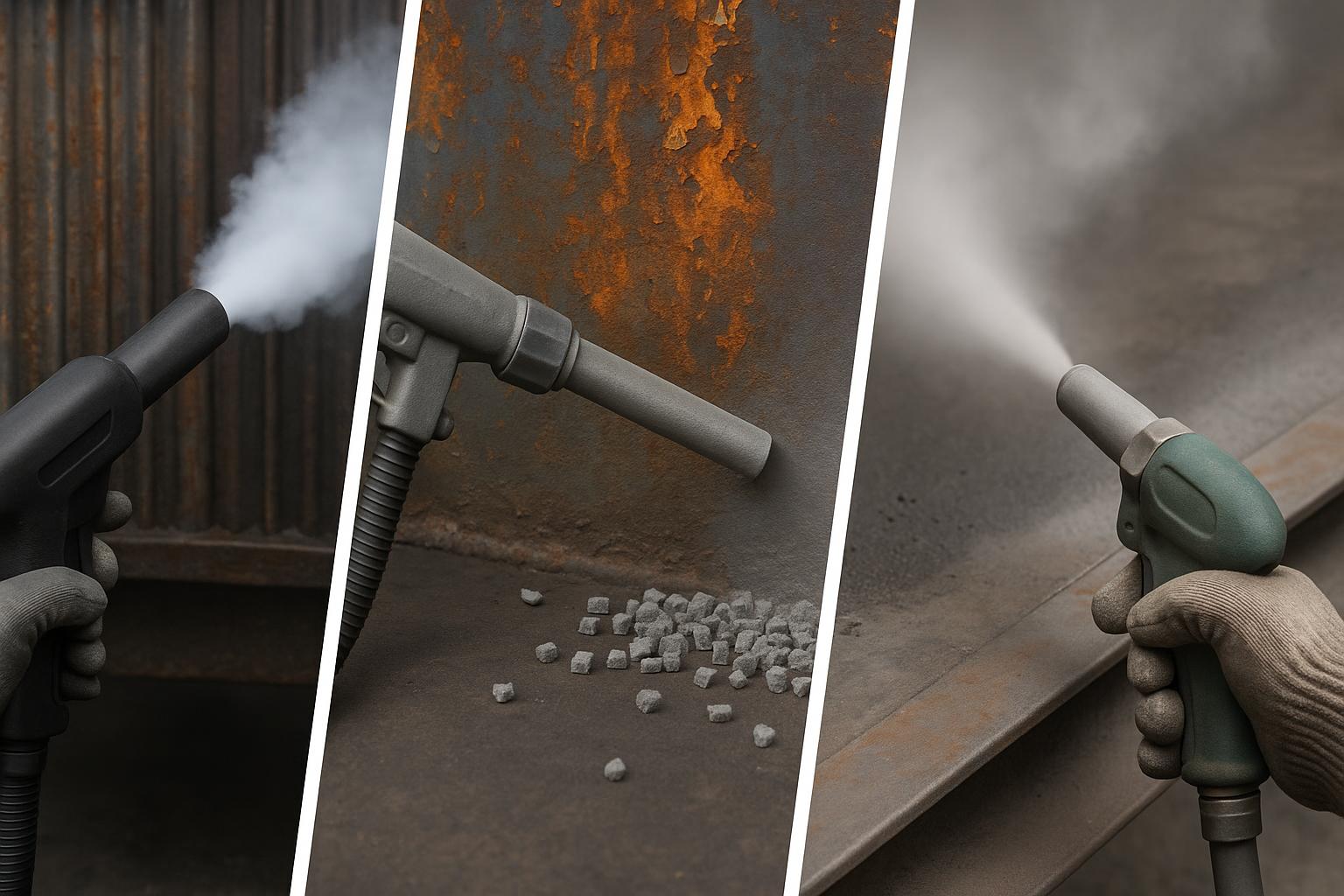
Dry ice blasting uses compressed air to propel frozen carbon dioxide (CO₂) pellets at a surface. On impact, the pellets sublimate—transforming directly from solid to gas—leaving no secondary waste. This makes it especially useful in environments where water, chemicals, or dust are not permissible, such as food processing, pharmaceutical manufacturing, and electrical equipment maintenance.
Abrasive blasting, by contrast, employs physical media, like crushed glass, plastic beads, or natural materials, to remove coatings, corrosion, or contaminants through mechanical force. While more aggressive than dry ice, it is better suited for applications that require surface profiling or the removal of thick layers of paint or rust.
Sponge blasting sits between these two approaches. It uses sponge media embedded with abrasives that compress on impact, allowing the abrasive to contact the surface before recoiling. This method provides greater dust suppression and control than traditional abrasive blasting and is well-suited for environments where both cleaning strength and containment are essential.
Choosing the Right Media
Each type of blasting media brings its own strengths and limitations:
- Sponge media: Offers controlled abrasiveness with excellent dust suppression. Ideal for indoor or sensitive environments.
- Plastic beads: Customizable for various tasks, particularly where less abrasive force is required.
- Crushed glass: Aggressive and cost-effective, but not ideal in areas where dust must be contained.
- Corn cob & walnut shell: Organic options for delicate work like log cabin restoration or soft substrate cleaning.
- Baking soda: Food-safe but can be messy and problematic in outdoor or landscaped areas.
- Aluminum oxide: Commonly used in heavy-duty industrial settings, such as power plant turbine cleaning.
Key Selection Criteria
Choosing a cleaning method starts with identifying the type of adherent to be removed—paint, grease, soot, or biofilm—and whether the surface must be left textured or smooth. Other important considerations include:
- Surface sensitivity: Will the substrate be damaged by abrasion?
- Dust or debris tolerance: Are containment and cleanup critical?
- Environmental or regulatory requirements: Are food safety or chemical restrictions in place?
- Accessibility: Will the work take place in a confined space or near bystanders?
- Timeline: Does the project require minimal downtime?
- Client specifications: Is there a preferred method or need for patch testing?
In practice, hybrid approaches often yield the best results. For instance, in historic restoration, dry ice blasting can be paired with chemical stripping to safely remove lead-based paint. In industrial maintenance, combining dry ice for general cleaning with abrasive blasting for surface profiling allows teams to meet both cleanliness and adhesion requirements.
Strategic Blasting Solutions
No single method works universally across all applications. The best outcomes typically result from a tailored solution that balances safety, performance, regulatory compliance, and environmental impact. A thorough site assessment, combined with access to a wide range of blasting technologies and media, helps ensure each project is executed to meet both technical and operational goals.
When working on complex industrial cleaning tasks—whether in a refinery, food plant, power facility, or restoration site—understanding the strengths and limitations of each blasting technique can lead to better outcomes, reduced downtime, and safer operations.