




Warren Petersen is an Arizona public servant, attorney, and real estate professional whose career spans both private enterprise and state government. A longtime resident of Gilbert, Arizona, Warren Petersen has owned and operated a real estate firm since 2000, giving him firsthand experience with land use, outdoor environments, and the realities of Arizona’s climate. He entered the Arizona State Legislature in 2013 and became Senate president in 2023, where he has focused on public safety, tax reduction, and policies affecting everyday Arizonans.
Beyond his legislative work, Warren Petersen is an active member of organizations such as the National Association of Realtors and the Boy Scouts of America. His personal interests include hiking and outdoor recreation, pursuits that are deeply connected to life in the Southwest. In a state known for extreme heat and varied terrain, understanding how to hike safely in hot conditions is essential. The topic of hot-weather hiking aligns naturally with both his policy focus on public well-being and his personal engagement with Arizona’s outdoor landscapes.
Practical Tips for Hiking Safely in Hot Weather
Hiking ranks among the most popular outdoor recreational activities in the United States. In 2024, more than 63 million Americans went hiking at least once. Hiking provides a diverse array of physical and mental health benefits, from improved cardiovascular functionality to reduced levels of stress. That said, individuals must take several steps to keep themselves safe while hiking, particularly in states such as Arizona, where average temperatures can exceed 100 degrees Fahrenheit, depending on the time of year.
The state of Arizona offers hikers a diversity of environments and natural wonders, including canyons, fields of wildflowers, and petrified forests. The state is home to 22 National Parks, including Grand Canyon National Park and Petrified Forest National Park. Before planning a hiking trip in Arizona, Americans should familiarize themselves with the state’s climate, which can prove challenging and, for the unprepared, potentially dangerous.
Arizona’s climate can vary considerably based on location. Phoenix, for example, typically experiences much warmer weather compared to Flagstaff. From July through August, average high temperatures in Phoenix exceed 100 degrees, peaking at 107 degrees in July, with an average low of 85 degrees. Even in Flagstaff, summer temperatures tend to stay above 80 degrees.
With these temperatures in mind, hikers should refrain from planning extensive hiking trips during the summer in Arizona. However, many regions of the state experience warm temperatures year-round, so hikers should learn how to effectively navigate warm hiking conditions.
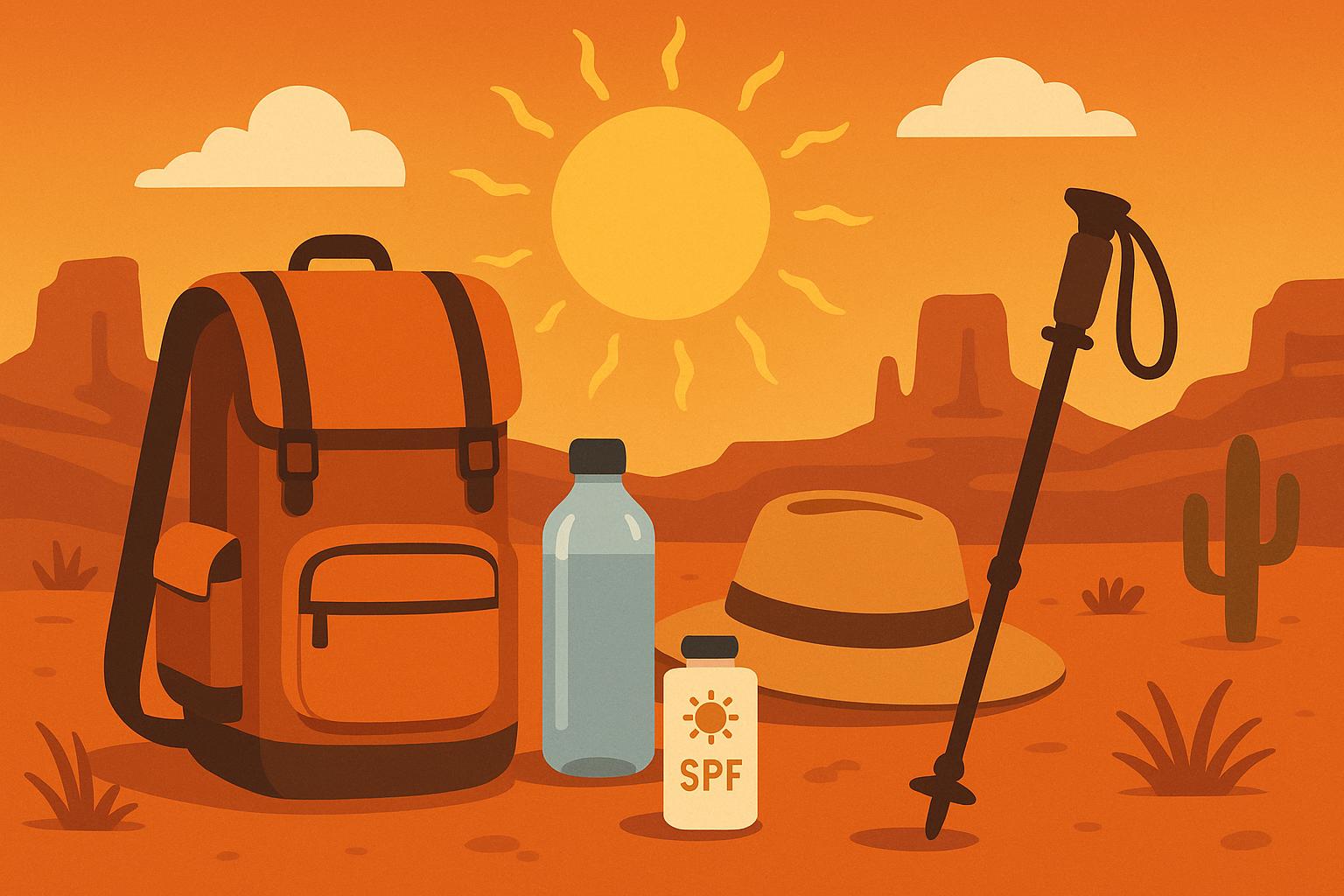
Consuming fluids is extremely important when it comes to staying safe while hiking. Each hiker’s water needs vary, but a general rule of thumb suggests that a person consume one-half liter of water per hour of moderate activity in moderate temperatures. This means that a person may need to consume one liter of water or more per hour in hot conditions. This can lead to a tricky cycle, as increasing the amount of water the person is carrying also increases their physical strain. Staying hydrated is important, but hikers should never carry more than they can handle, especially on hot days.
Dressing for comfort is another important strategy for warm-weather hiking. Hikers should prioritize light colored clothing and use fabrics designed to keep people cool. Examples include quick-drying moisture-wicking materials, some of which may provide ultraviolet protection. Individuals should also consider loose clothing that allows ample air circulation.
All hikers should protect themselves against the sun, but sun protection becomes increasingly important as the temperatures rise. Hikers can wear various styles of headbands and neck gaiters to protect their heads and necks from exposure to the sun. Individuals should also apply sunscreen to avoid developing a serious sunburn.
Hikers can plan their treks with hot conditions in mind. In addition to avoiding hikes during the hottest times of year, hikers can avoid the hottest parts of the day by scheduling their trips for early morning or as dusk approaches. They can also choose routes that provide shade and cover from the sun or access to water.
Finally, hikers in Arizona and other warm-weather states should know how to recognize and respond to heat-related conditions, such as heat exhaustion. The symptoms of heat exhaustion include profuse sweating, elevated pulse, dizziness and nausea, fatigue, and muscle cramps. Hikers suffering from heat exhaustion should get out of the heat as soon as possible, either by getting off the trail or finding shade. They should rehydrate, cool themselves off with water, and take as much time as they need to lower their body’s core temperature. Other serious heat-related health conditions include dehydration, overhydration, and heat stroke.
About Warren Petersen
Warren Petersen is the president of the Arizona Senate and a longtime real estate professional based in Gilbert, Arizona. An attorney and small business owner, he has served in the Arizona State Legislature since 2013 and has supported legislation focused on tax reduction, public safety, and government accountability. His background in real estate and personal interest in hiking inform his appreciation for Arizona’s outdoor environments and the importance of safety and preparation when enjoying them.